Lapis Lazuli
[TG_GEMSTONE]
[TG_INTRO]
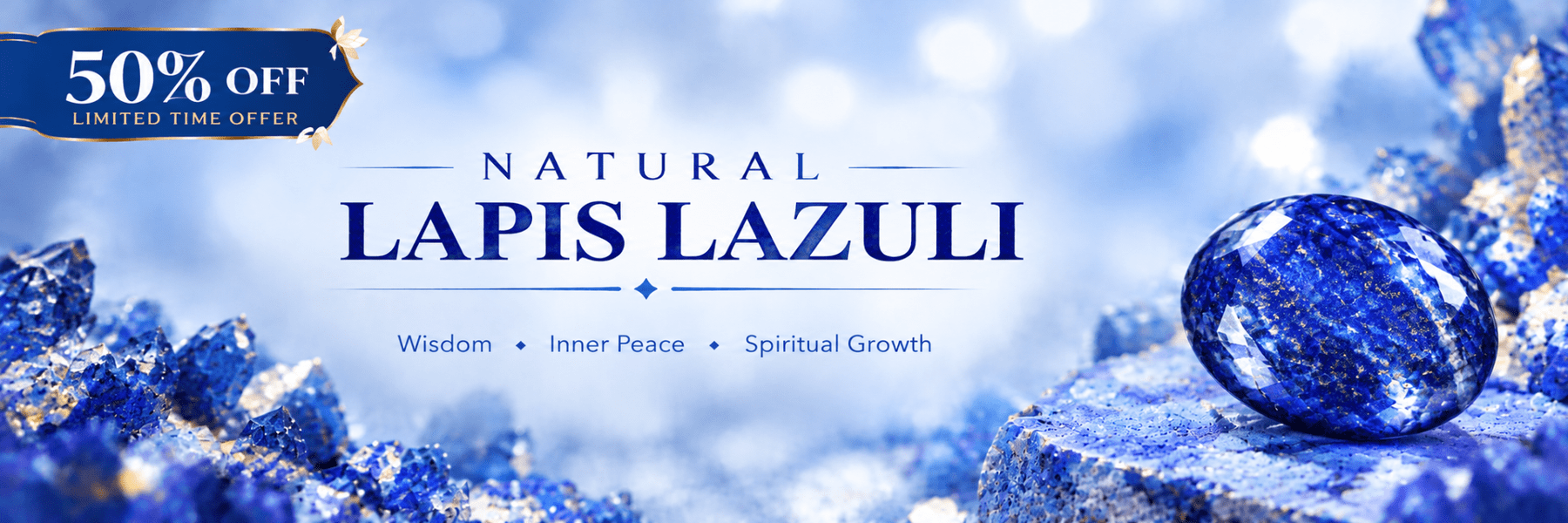
Lapis Lazuli is a striking deep-blue ornamental gemstone treasured for its rich colour, often highlighted by golden pyrite flecks and occasional white calcite markings. Its distinctive appearance has made it popular in jewellery, decorative carvings, beads, pendants, and traditional accessories for thousands of years.
At Tanishq Gems, Lapis Lazuli is an attractive choice for customers who appreciate bold blue gemstones with natural patterns and a timeless appeal. Each stone can differ in its blue shade, pyrite inclusions, calcite markings, and overall appearance, making every piece unique.
[/TG_INTRO]
[TG_ORIGIN]
Lapis Lazuli has a long history of use in jewellery and decorative objects. Important sources include Afghanistan, particularly the Badakhshan region, as well as Chile and other locations with suitable geological formations.
Unlike a single mineral gemstone, Lapis Lazuli is a decorative rock composed mainly of lazurite, along with varying amounts of calcite, pyrite, and other minerals. Lazurite gives the stone its characteristic blue colour, while pyrite can create attractive golden specks. White calcite may appear as veins or patches.
The colour, mineral composition, and overall quality vary naturally. Some commercial pieces may be dyed, coated, or otherwise treated, so treatment information should be checked for individual products.
[/TG_ORIGIN]
[TG_PROPERTIES]
**Gemstone Name:** Lapis Lazuli
**Material Type:** Decorative gemstone rock
**Main Colouring Mineral:** Lazurite
**Other Common Minerals:** Calcite, pyrite, and other associated minerals
**Typical Colours:** Royal blue, deep blue, violet-blue, and blue with white or golden markings
**Transparency:** Generally opaque
**Mohs Hardness:** Approximately 5–5.5
**Lustre:** Dull to vitreous, depending on the surface and polish
**Distinctive Features:** Deep-blue colour, golden pyrite flecks, and occasional white calcite veins
**Common Cuts:** Cabochon, oval, round, freeform, and polished beads
**Common Uses:** Bracelets, malas, pendants, beads, rings, carvings, and decorative objects
**Treatment:** Some commercial material may be dyed, coated, or impregnated; treatment varies by product.
[/TG_PROPERTIES]
[TG_WHY_BUY]
Rich blue colour that creates a bold jewellery statement
Natural golden pyrite flecks can add distinctive contrast
A gemstone with a long history in jewellery and decorative arts
Suitable for bracelets, malas, beads, pendants, and carvings
Pairs well with silver-coloured and gold-coloured jewellery settings
Natural variations give each piece an individual appearance
A thoughtful gift for gemstone collectors and lovers of blue jewellery
[/TG_WHY_BUY]
[TG_PRICE]
The price of Lapis Lazuli depends on the intensity and uniformity of its blue colour, the amount and distribution of pyrite and calcite, the quality of the polish, size, craftsmanship, origin, and any treatments.
Pieces with rich, attractive blue colour and balanced natural markings may be priced differently from stones with extensive white calcite, uneven colour, or colour enhancement. When comparing products, check the stone dimensions, bead size, finish, treatment disclosure, and any available information about origin. Natural mineral variations are normal and contribute to the appearance of each piece.
[/TG_PRICE]
[TG_CARE]
Lapis Lazuli is softer than many common jewellery gemstones, so handle it gently. Clean it with a soft, slightly damp cloth and dry it immediately. If additional cleaning is necessary, use minimal lukewarm water and mild soap only when appropriate for the specific stone and its treatment.
Avoid prolonged soaking, harsh chemicals, acidic cleaners, ultrasonic cleaners, steam cleaning, and sudden temperature changes. These may damage the stone or affect dyes, coatings, or other treatments.
Store Lapis Lazuli separately from harder gemstones to reduce scratches. Remove bracelets before swimming, showering, exercising, or using household cleaning products, especially if they include elastic cords or metal fittings.
[/TG_CARE]
[TG_FAQ question=”What is Lapis Lazuli gemstone?”]
Lapis Lazuli is a deep-blue ornamental gemstone rock composed mainly of lazurite, with varying amounts of minerals such as calcite and pyrite. It is popular for jewellery, beads, pendants, carvings, and decorative objects.
[/TG_FAQ]
[TG_FAQ question=”Is Lapis Lazuli a natural gemstone?”]
Yes, Lapis Lazuli occurs naturally as a rock composed of several minerals. However, some commercial pieces may be dyed, coated, or otherwise treated, so buyers should check the product’s treatment information.
[/TG_FAQ]
[TG_FAQ question=”Why does Lapis Lazuli have golden spots?”]
The golden or brassy flecks often seen in Lapis Lazuli are usually pyrite, a naturally occurring iron sulphide mineral. The quantity and distribution of pyrite vary from stone to stone.
[/TG_FAQ]
[TG_FAQ question=”Where does Lapis Lazuli come from?”]
Important sources include Afghanistan, especially the Badakhshan region, and Chile. Other occurrences are also known. The origin of an individual stone should be confirmed through reliable supplier information when available.
[/TG_FAQ]
[TG_FAQ question=”What is the hardness of Lapis Lazuli?”]
Lapis Lazuli generally has a Mohs hardness of approximately 5–5.5. It is suitable for many jewellery designs but scratches more easily than harder stones, so it needs careful handling.
[/TG_FAQ]
[TG_FAQ question=”How can I identify good-quality Lapis Lazuli?”]
Look for an attractive blue colour, a good polish, and a pattern of pyrite or calcite that appeals to you. Check for disclosed dyeing or other treatments, as appearance alone cannot reliably confirm whether a stone has been enhanced.
[/TG_FAQ]
[TG_FAQ question=”What are the traditional beliefs associated with Lapis Lazuli?”]
In some cultural and spiritual traditions, Lapis Lazuli is associated with wisdom, self-expression, and inner awareness. These are traditional beliefs rather than scientifically established effects.
[/TG_FAQ]
[TG_FAQ question=”How should I clean Lapis Lazuli jewellery?”]
Wipe it gently with a soft, slightly damp cloth and dry it immediately. Avoid soaking, harsh chemicals, ultrasonic cleaners, and steam cleaning, especially if the stone has been dyed or otherwise treated.
[/TG_FAQ]
[/TG_GEMSTONE]
Showing the single result
Lapis Lazuli
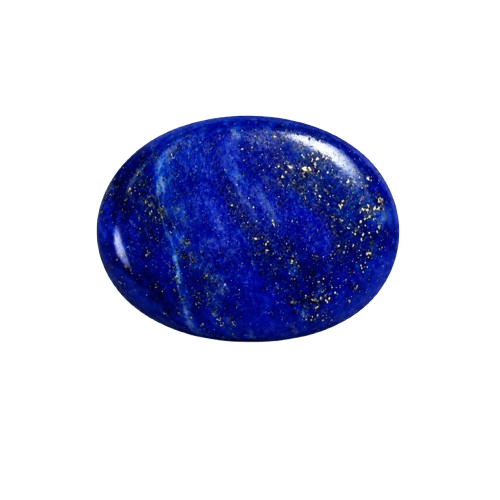
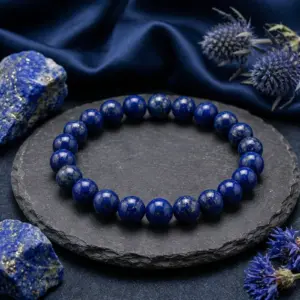
Lapis Lazuli is a striking deep-blue ornamental gemstone treasured for its rich colour, often highlighted by golden pyrite flecks and occasional white calcite markings. Its distinctive appearance has made it popular in jewellery, decorative carvings, beads, pendants, and traditional accessories for thousands of years.
At Tanishq Gems, Lapis Lazuli is an attractive choice for customers who appreciate bold blue gemstones with natural patterns and a timeless appeal. Each stone can differ in its blue shade, pyrite inclusions, calcite markings, and overall appearance, making every piece unique.
Lapis Lazuli Origin
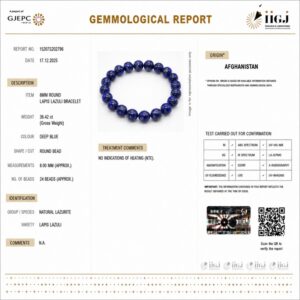
Lapis Lazuli has a long history of use in jewellery and decorative objects. Important sources include Afghanistan, particularly the Badakhshan region, as well as Chile and other locations with suitable geological formations.
Unlike a single mineral gemstone, Lapis Lazuli is a decorative rock composed mainly of lazurite, along with varying amounts of calcite, pyrite, and other minerals. Lazurite gives the stone its characteristic blue colour, while pyrite can create attractive golden specks. White calcite may appear as veins or patches.
The colour, mineral composition, and overall quality vary naturally. Some commercial pieces may be dyed, coated, or otherwise treated, so treatment information should be checked for individual products.
Lapis Lazuli Properties
**Gemstone Name:** Lapis Lazuli
**Material Type:** Decorative gemstone rock
**Main Colouring Mineral:** Lazurite
**Other Common Minerals:** Calcite, pyrite, and other associated minerals
**Typical Colours:** Royal blue, deep blue, violet-blue, and blue with white or golden markings
**Transparency:** Generally opaque
**Mohs Hardness:** Approximately 5–5.5
**Lustre:** Dull to vitreous, depending on the surface and polish
**Distinctive Features:** Deep-blue colour, golden pyrite flecks, and occasional white calcite veins
**Common Cuts:** Cabochon, oval, round, freeform, and polished beads
**Common Uses:** Bracelets, malas, pendants, beads, rings, carvings, and decorative objects
**Treatment:** Some commercial material may be dyed, coated, or impregnated; treatment varies by product.
Why Buy Lapis Lazuli from Tanishq Gems
What Decides Lapis Lazuli Price
The price of Lapis Lazuli depends on the intensity and uniformity of its blue colour, the amount and distribution of pyrite and calcite, the quality of the polish, size, craftsmanship, origin, and any treatments.
Pieces with rich, attractive blue colour and balanced natural markings may be priced differently from stones with extensive white calcite, uneven colour, or colour enhancement. When comparing products, check the stone dimensions, bead size, finish, treatment disclosure, and any available information about origin. Natural mineral variations are normal and contribute to the appearance of each piece.
How to Care for Lapis Lazuli
Lapis Lazuli is softer than many common jewellery gemstones, so handle it gently. Clean it with a soft, slightly damp cloth and dry it immediately. If additional cleaning is necessary, use minimal lukewarm water and mild soap only when appropriate for the specific stone and its treatment.
Avoid prolonged soaking, harsh chemicals, acidic cleaners, ultrasonic cleaners, steam cleaning, and sudden temperature changes. These may damage the stone or affect dyes, coatings, or other treatments.
Store Lapis Lazuli separately from harder gemstones to reduce scratches. Remove bracelets before swimming, showering, exercising, or using household cleaning products, especially if they include elastic cords or metal fittings.
Lapis Lazuli FAQs
Answers to common customer questions
What is Lapis Lazuli gemstone?
Lapis Lazuli is a deep-blue ornamental gemstone rock composed mainly of lazurite, with varying amounts of minerals such as calcite and pyrite. It is popular for jewellery, beads, pendants, carvings, and decorative objects.
Is Lapis Lazuli a natural gemstone?
Yes, Lapis Lazuli occurs naturally as a rock composed of several minerals. However, some commercial pieces may be dyed, coated, or otherwise treated, so buyers should check the product's treatment information.
Why does Lapis Lazuli have golden spots?
The golden or brassy flecks often seen in Lapis Lazuli are usually pyrite, a naturally occurring iron sulphide mineral. The quantity and distribution of pyrite vary from stone to stone.
Where does Lapis Lazuli come from?
Important sources include Afghanistan, especially the Badakhshan region, and Chile. Other occurrences are also known. The origin of an individual stone should be confirmed through reliable supplier information when available.
What is the hardness of Lapis Lazuli?
Lapis Lazuli generally has a Mohs hardness of approximately 5–5.5. It is suitable for many jewellery designs but scratches more easily than harder stones, so it needs careful handling.
How can I identify good-quality Lapis Lazuli?
Look for an attractive blue colour, a good polish, and a pattern of pyrite or calcite that appeals to you. Check for disclosed dyeing or other treatments, as appearance alone cannot reliably confirm whether a stone has been enhanced.
What are the traditional beliefs associated with Lapis Lazuli?
In some cultural and spiritual traditions, Lapis Lazuli is associated with wisdom, self-expression, and inner awareness. These are traditional beliefs rather than scientifically established effects.
How should I clean Lapis Lazuli jewellery?
Wipe it gently with a soft, slightly damp cloth and dry it immediately. Avoid soaking, harsh chemicals, ultrasonic cleaners, and steam cleaning, especially if the stone has been dyed or otherwise treated.