Moonstone
[TG_GEMSTONE]
[TG_INTRO]
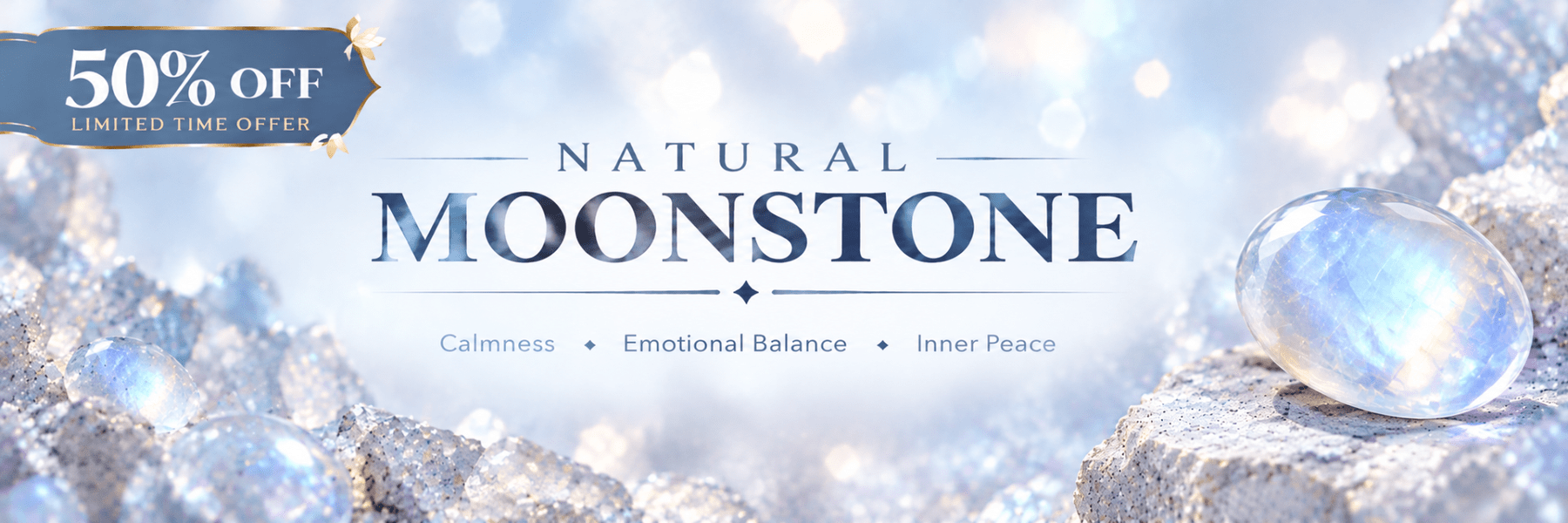
Moonstone is an enchanting gemstone admired for its soft glow and distinctive optical effect known as adularescence. This effect creates a floating, moon-like sheen that appears to move across the surface of the stone as it catches the light. Moonstone is commonly found in white, cream, grey, peach, and other subtle shades, sometimes displaying a blue or silvery glow.
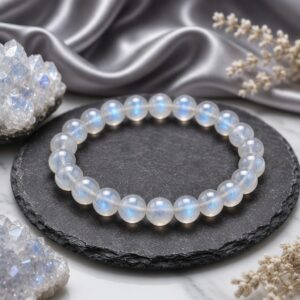
Popular in rings, pendants, earrings, bracelets, and decorative jewellery, Moonstone offers a delicate and elegant appearance. Its gentle colours and luminous surface make it a favourite among people who appreciate gemstones with a soft, ethereal character.
Moonstone has a long history in jewellery and traditional gemstone symbolism. It is also associated with June birthstone traditions and is used in both contemporary and traditional jewellery designs.
[/TG_INTRO]
[TG_ORIGIN]
Moonstone belongs to the feldspar mineral group and is valued for its characteristic internal light effect. Important sources include India, Sri Lanka, Madagascar, Myanmar, Tanzania, and other regions.
The optical glow of Moonstone results from the interaction of light with microscopic internal layers or structures within the gemstone. The appearance varies according to the stone’s composition, transparency, cut, and viewing angle. Some specimens display a blue sheen, while others show a white or silvery glow.
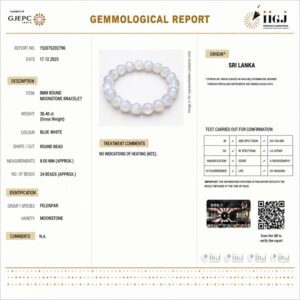
Moonstone is often cut into smooth cabochons to highlight its luminous effect, although faceted varieties are also available. The origin and quality of an individual stone should be confirmed through reliable supplier information where available.
[/TG_ORIGIN]
[TG_PROPERTIES]
Gemstone Name: Moonstone
Mineral Group: Feldspar
Common Composition: Orthoclase feldspar with internal feldspar layering
Colour: White, cream, grey, peach, and other subtle shades
Optical Effect: Adularescence, a floating sheen that appears to move across the stone
Hardness: Approximately 6–6.5 on the Mohs scale
Lustre: Vitreous to pearly
Transparency: Transparent to translucent
Common Cuts: Oval, round, pear, cushion, and smooth cabochon cuts
Common Uses: Rings, pendants, earrings, bracelets, beads, and decorative jewellery
Quality Factors: Strength and colour of the sheen, transparency, body colour, cut, surface quality, and overall appearance
Treatment: Treatment status varies; confirm any enhancements with the seller
[/TG_PROPERTIES]
[TG_WHY_BUY]
Distinctive Moon-Like Glow: Its floating sheen creates a unique visual effect.
Soft Natural Colours: Available in white, cream, grey, peach, and other subtle tones.
Elegant Jewellery Style: Complements traditional and modern jewellery designs.
Unique Optical Character: The glow can appear to shift as the stone moves in the light.
Versatile Design Options: Used in rings, pendants, bracelets, earrings, and beads.
Popular Cabochon Gemstone: Smooth cuts help highlight its characteristic sheen.
Meaningful Gift Choice: Often selected for birthdays, anniversaries, and special occasions.
Traditional Symbolism: In some cultural and spiritual traditions, Moonstone is associated with intuition, harmony, and new beginnings; these associations are beliefs rather than scientifically proven effects.
[/TG_WHY_BUY]
[TG_PRICE]
The price of Moonstone depends on the strength and colour of its sheen, transparency, body colour, cut quality, size, origin, and overall finish. Stones with a distinct blue sheen, attractive transparency, and a well-positioned optical effect may command higher prices than specimens with a weaker or less visible glow.
The quality of the cut is particularly important because the sheen is best seen when the stone is oriented and shaped appropriately. When purchasing Moonstone, examine it under different lighting angles and ask about its origin and any treatments. For higher-value purchases, consider independent gemmological identification.
[/TG_PRICE]
[TG_CARE]
Moonstone has moderate hardness and can be vulnerable to scratches, chips, and damage from strong impacts. Remove Moonstone jewellery before sports, heavy work, or activities that may expose the stone to knocks.
Clean Moonstone with lukewarm water, mild soap, and a soft cloth or brush. Rinse gently and dry it thoroughly. Avoid harsh chemicals, abrasive products, sudden temperature changes, and ultrasonic or steam cleaners unless a qualified jeweller confirms that they are safe for the specific stone and setting.
Store Moonstone separately from harder gemstones to reduce scratches. Use a soft pouch or a lined jewellery box, and check jewellery settings regularly to ensure the stone remains secure.
[/TG_CARE]
[TG_FAQ question=”1. What is Moonstone gemstone?”]
Moonstone is a feldspar gemstone known for its characteristic floating glow, called adularescence. It is commonly used in rings, pendants, earrings, bracelets, and other jewellery.
[/TG_FAQ]
[TG_FAQ question=”2. What colours does Moonstone come in?”]
Moonstone commonly appears white, cream, grey, or peach. Depending on the specimen, it may display a blue, white, or silvery sheen when viewed from different angles.
[/TG_FAQ]
[TG_FAQ question=”3. What is adularescence in Moonstone?”]
Adularescence is the soft, floating light effect that appears to move across Moonstone’s surface. It results from the interaction of light with internal structures in the gemstone.
[/TG_FAQ]
[TG_FAQ question=”4. Where is Moonstone found?”]
Moonstone is sourced from regions including India, Sri Lanka, Madagascar, Myanmar, and Tanzania. The colour, transparency, and sheen can vary between individual stones and sources.
[/TG_FAQ]
[TG_FAQ question=”5. Is Moonstone suitable for everyday wear?”]
Moonstone can be worn regularly with care, but its moderate hardness and tendency to chip make it less suitable for rough daily activities. Protective settings and careful handling help reduce damage.
[/TG_FAQ]
[TG_FAQ question=”6. Is Moonstone a birthstone?”]
Moonstone is associated with June birthstone traditions, alongside other recognised June birthstones. It is a popular choice for birthday gifts and jewellery.
[/TG_FAQ]
[TG_FAQ question=”7. How can I identify genuine Moonstone?”]
A characteristic floating sheen can help identify Moonstone, but appearance alone cannot always confirm authenticity. For reliable identification, consult a qualified gemmologist or an appropriate gem-testing laboratory.
[/TG_FAQ]
[TG_FAQ question=”8. How should I clean a Moonstone bracelet or ring?”]
Clean Moonstone gently with lukewarm water, mild soap, and a soft cloth or brush. Avoid harsh chemicals, abrasive cleaners, sudden temperature changes, and potentially damaging ultrasonic or steam cleaning.
[/TG_FAQ]
[/TG_GEMSTONE]
Showing the single result
Moonstone
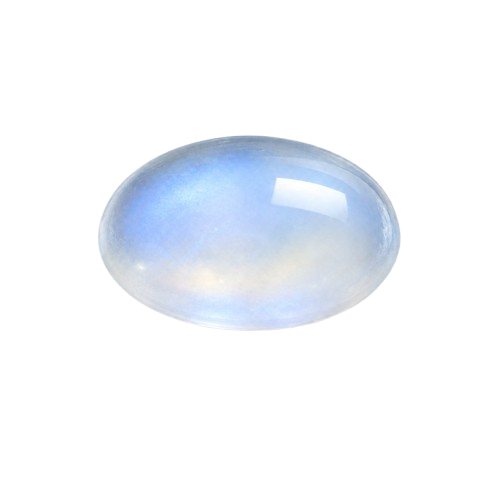
Moonstone is an enchanting gemstone admired for its soft glow and distinctive optical effect known as adularescence. This effect creates a floating, moon-like sheen that appears to move across the surface of the stone as it catches the light. Moonstone is commonly found in white, cream, grey, peach, and other subtle shades, sometimes displaying a blue or silvery glow.
Popular in rings, pendants, earrings, bracelets, and decorative jewellery, Moonstone offers a delicate and elegant appearance. Its gentle colours and luminous surface make it a favourite among people who appreciate gemstones with a soft, ethereal character.
Moonstone has a long history in jewellery and traditional gemstone symbolism. It is also associated with June birthstone traditions and is used in both contemporary and traditional jewellery designs.
Moonstone Origin
Moonstone belongs to the feldspar mineral group and is valued for its characteristic internal light effect. Important sources include India, Sri Lanka, Madagascar, Myanmar, Tanzania, and other regions.
The optical glow of Moonstone results from the interaction of light with microscopic internal layers or structures within the gemstone. The appearance varies according to the stone's composition, transparency, cut, and viewing angle. Some specimens display a blue sheen, while others show a white or silvery glow.
Moonstone is often cut into smooth cabochons to highlight its luminous effect, although faceted varieties are also available. The origin and quality of an individual stone should be confirmed through reliable supplier information where available.
Moonstone Properties
Gemstone Name: Moonstone
Mineral Group: Feldspar
Common Composition: Orthoclase feldspar with internal feldspar layering
Colour: White, cream, grey, peach, and other subtle shades
Optical Effect: Adularescence, a floating sheen that appears to move across the stone
Hardness: Approximately 6–6.5 on the Mohs scale
Lustre: Vitreous to pearly
Transparency: Transparent to translucent
Common Cuts: Oval, round, pear, cushion, and smooth cabochon cuts
Common Uses: Rings, pendants, earrings, bracelets, beads, and decorative jewellery
Quality Factors: Strength and colour of the sheen, transparency, body colour, cut, surface quality, and overall appearance
Treatment: Treatment status varies; confirm any enhancements with the seller
Why Buy Moonstone from Tanishq Gems
What Decides Moonstone Price
The price of Moonstone depends on the strength and colour of its sheen, transparency, body colour, cut quality, size, origin, and overall finish. Stones with a distinct blue sheen, attractive transparency, and a well-positioned optical effect may command higher prices than specimens with a weaker or less visible glow.
The quality of the cut is particularly important because the sheen is best seen when the stone is oriented and shaped appropriately. When purchasing Moonstone, examine it under different lighting angles and ask about its origin and any treatments. For higher-value purchases, consider independent gemmological identification.
How to Care for Moonstone
Moonstone has moderate hardness and can be vulnerable to scratches, chips, and damage from strong impacts. Remove Moonstone jewellery before sports, heavy work, or activities that may expose the stone to knocks.
Clean Moonstone with lukewarm water, mild soap, and a soft cloth or brush. Rinse gently and dry it thoroughly. Avoid harsh chemicals, abrasive products, sudden temperature changes, and ultrasonic or steam cleaners unless a qualified jeweller confirms that they are safe for the specific stone and setting.
Store Moonstone separately from harder gemstones to reduce scratches. Use a soft pouch or a lined jewellery box, and check jewellery settings regularly to ensure the stone remains secure.
Moonstone FAQs
Answers to common customer questions
1. What is Moonstone gemstone?
Moonstone is a feldspar gemstone known for its characteristic floating glow, called adularescence. It is commonly used in rings, pendants, earrings, bracelets, and other jewellery.
2. What colours does Moonstone come in?
Moonstone commonly appears white, cream, grey, or peach. Depending on the specimen, it may display a blue, white, or silvery sheen when viewed from different angles.
3. What is adularescence in Moonstone?
Adularescence is the soft, floating light effect that appears to move across Moonstone's surface. It results from the interaction of light with internal structures in the gemstone.
4. Where is Moonstone found?
Moonstone is sourced from regions including India, Sri Lanka, Madagascar, Myanmar, and Tanzania. The colour, transparency, and sheen can vary between individual stones and sources.
5. Is Moonstone suitable for everyday wear?
Moonstone can be worn regularly with care, but its moderate hardness and tendency to chip make it less suitable for rough daily activities. Protective settings and careful handling help reduce damage.
6. Is Moonstone a birthstone?
Moonstone is associated with June birthstone traditions, alongside other recognised June birthstones. It is a popular choice for birthday gifts and jewellery.
7. How can I identify genuine Moonstone?
A characteristic floating sheen can help identify Moonstone, but appearance alone cannot always confirm authenticity. For reliable identification, consult a qualified gemmologist or an appropriate gem-testing laboratory.
8. How should I clean a Moonstone bracelet or ring?
Clean Moonstone gently with lukewarm water, mild soap, and a soft cloth or brush. Avoid harsh chemicals, abrasive cleaners, sudden temperature changes, and potentially damaging ultrasonic or steam cleaning.