Pearl (Moti)
[TG_GEMSTONE]
[TG_INTRO]
Pearl, traditionally known as Moti in Hindi, is a timeless gem admired for its soft lustre, elegant appearance, and natural beauty. Unlike most gemstones that are cut from minerals, pearls form within certain molluscs, including oysters and mussels. Their delicate glow and smooth surface have made them popular in jewellery across cultures for centuries.
Pearls are available in white, cream, pink, golden, grey, and black shades. They are used in necklaces, earrings, bracelets, rings, and traditional jewellery designs. Depending on the type, pearls may be natural, cultured, freshwater, or saltwater, with each category offering its own characteristics and price range.
Whether chosen for everyday elegance or special occasions, Pearl jewellery remains a classic option for people who appreciate understated beauty and traditional craftsmanship.
[/TG_INTRO]
[TG_ORIGIN]
Pearls form when a mollusc deposits layers of nacre around an irritant or implanted nucleus. Natural pearls develop without deliberate human intervention, while cultured pearls form after human assistance initiates the pearl-forming process.
Freshwater cultured pearls are commonly produced in freshwater mussels, while saltwater cultured pearls are grown in oysters. Important pearl-producing regions include China, Japan, Australia, Indonesia, the Philippines, and other areas with suitable freshwater or marine environments.
Pearls used in jewellery vary in size, shape, colour, lustre, surface quality, and formation method. When purchasing a pearl, it is helpful to confirm whether it is natural, cultured, imitation, or treated.
[/TG_ORIGIN]
[TG_PROPERTIES]
Gemstone Name: Pearl (Moti)
Type: Organic gem material
Formation: Produced by certain molluscs
Main Varieties: Natural pearls, cultured pearls, freshwater pearls, and saltwater pearls
Common Colours: White, cream, pink, golden, grey, and black
Shape: Round, near-round, oval, button, drop, and baroque
Lustre: Soft, pearly glow ranging from moderate to high
Hardness: Approximately 2.5–4.5 on the Mohs scale, depending on the pearl
Composition: Primarily calcium carbonate in the form of aragonite, with an organic matrix
Common Uses: Necklaces, earrings, bracelets, rings, and traditional jewellery
Treatment: Some pearls may be bleached, dyed, irradiated, or otherwise enhanced
Care Level: Requires gentle handling because pearls are softer and more sensitive than many mineral gemstones
[/TG_PROPERTIES]
[TG_WHY_BUY]
Timeless Elegance: Pearl jewellery offers a classic look suitable for both traditional and modern styles.
Soft Natural Lustre: Its gentle glow creates a refined appearance without excessive sparkle.
Versatile Colours: Available in white, cream, pink, golden, grey, and black tones.
Multiple Jewellery Styles: Suitable for necklaces, earrings, bracelets, pendants, and rings.
Distinctive Natural Character: Pearls can vary in shape, surface texture, and lustre.
Meaningful Gift Option: A popular choice for birthdays, anniversaries, weddings, and celebrations.
Traditional Indian Significance: Moti is associated with the Moon in Vedic astrological traditions.
Traditional Symbolism: Pearls are often linked with purity, grace, and tranquillity in various cultures; these associations are symbolic rather than scientifically proven effects.
[/TG_WHY_BUY]
[TG_PRICE]
The price of Pearl (Moti) depends on whether it is natural, cultured, or imitation, as well as its size, shape, lustre, surface quality, colour, matching, and origin. Round pearls with attractive lustre and fewer visible surface blemishes may command higher prices. Natural pearls are generally much rarer than cultured pearls and can be substantially more expensive.
Freshwater and saltwater pearls also differ in production methods and market pricing. Before purchasing, ask the seller to disclose the pearl type, any treatments, and whether the product contains genuine pearl material or an imitation. For high-value natural pearls, consider an independent gemmological report.
[/TG_PRICE]
[TG_CARE]
Pearls are softer and more sensitive to chemicals than many mineral gemstones. Put pearl jewellery on after applying perfume, hairspray, cosmetics, or lotion, and remove it before bathing, swimming, exercising, or household cleaning.
After wearing, gently wipe pearls with a clean, soft cloth to remove perspiration and residue. If necessary, use a lightly damp cloth and dry the pearls thoroughly. Avoid soaking them, using harsh detergents, or cleaning them with ultrasonic or steam equipment.
Store pearls separately in a soft pouch or lined jewellery box to protect them from scratches. Avoid prolonged exposure to direct sunlight, excessive heat, and very dry conditions. For pearl necklaces, check the string and clasp periodically and arrange professional restringing when needed.
[/TG_CARE]
[TG_FAQ question=”1. What is Pearl (Moti) gemstone?”]
Pearl, known as Moti in Hindi, is an organic gem formed by certain molluscs, including oysters and mussels. It is valued for its soft lustre and is widely used in necklaces, earrings, bracelets, and traditional jewellery.
[/TG_FAQ]
[TG_FAQ question=”2. What colours are pearls available in?”]
Pearls occur in white, cream, pink, golden, grey, and black shades, among others. Their colour depends on the type of mollusc, growing environment, and any treatments applied.
[/TG_FAQ]
[TG_FAQ question=”3. What is the difference between natural and cultured pearls?”]
Natural pearls form without deliberate human intervention, while cultured pearls form after a person initiates the pearl-forming process in a mollusc. Both can be genuine pearls, but their rarity and market value can differ considerably.
[/TG_FAQ]
[TG_FAQ question=”4. Are freshwater pearls real pearls?”]
Yes. Freshwater pearls are genuine pearls produced by freshwater mussels. They are commonly cultured and are available in a wide range of shapes, sizes, and colours.
[/TG_FAQ]
[TG_FAQ question=”5. How can I identify a genuine pearl?”]
Visual inspection alone may not reliably distinguish natural, cultured, and imitation pearls. Check the seller’s disclosure and, for valuable purchases, request an assessment from a qualified gemmologist or an appropriate gem-testing laboratory.
[/TG_FAQ]
[TG_FAQ question=”6. Is Pearl (Moti) suitable for everyday wear?”]
Pearls can be worn regularly, but they require more care than harder gemstones because they are relatively soft and sensitive to chemicals. Avoid rough handling, perspiration build-up, and contact with cosmetics or cleaning products.
[/TG_FAQ]
[TG_FAQ question=”7. How should I clean a Pearl bracelet or necklace?”]
Gently wipe the pearls with a clean, soft cloth after wearing. If needed, use a lightly damp cloth and dry thoroughly. Avoid harsh chemicals, prolonged soaking, ultrasonic cleaners, and steam cleaning.
[/TG_FAQ]
[TG_FAQ question=”8. What is the traditional significance of Moti in astrology?”]
In Vedic astrological traditions, Moti is associated with the Moon. Some practitioners recommend it for symbolic or astrological reasons, but claims about its effects on health, personality, or life outcomes are not scientifically established.
[/TG_FAQ]
[/TG_GEMSTONE]
Showing the single result
-
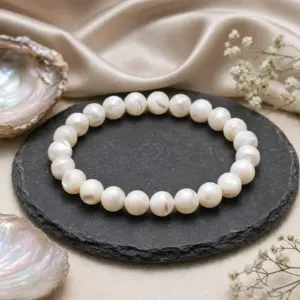
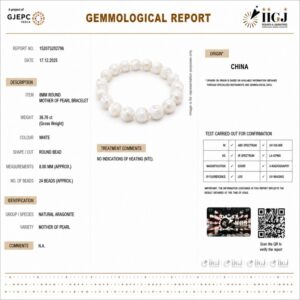 ✦ SALE Add to cartMother of Pearl BraceletPearl (Moti)Original price was: ₹1,600.00.₹800.00Current price is: ₹800.00.
Mother of Pearl Bracelet
Pearl (Moti) Original price was: ₹1,600.00.₹800.00Current price is: ₹800.00.
Pearl (Moti)
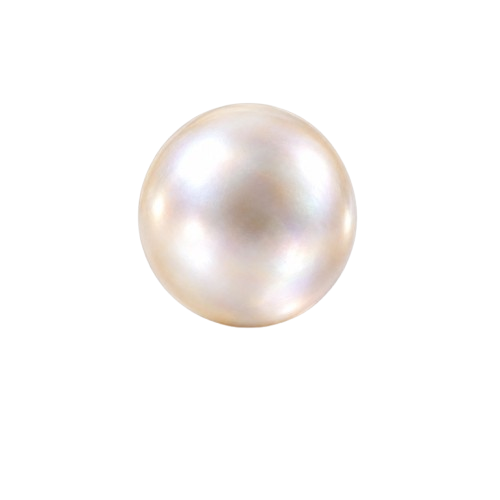
Pearl, traditionally known as Moti in Hindi, is a timeless gem admired for its soft lustre, elegant appearance, and natural beauty. Unlike most gemstones that are cut from minerals, pearls form within certain molluscs, including oysters and mussels. Their delicate glow and smooth surface have made them popular in jewellery across cultures for centuries.
Pearls are available in white, cream, pink, golden, grey, and black shades. They are used in necklaces, earrings, bracelets, rings, and traditional jewellery designs. Depending on the type, pearls may be natural, cultured, freshwater, or saltwater, with each category offering its own characteristics and price range.
Whether chosen for everyday elegance or special occasions, Pearl jewellery remains a classic option for people who appreciate understated beauty and traditional craftsmanship.
Pearl (Moti) Origin
Pearls form when a mollusc deposits layers of nacre around an irritant or implanted nucleus. Natural pearls develop without deliberate human intervention, while cultured pearls form after human assistance initiates the pearl-forming process.
Freshwater cultured pearls are commonly produced in freshwater mussels, while saltwater cultured pearls are grown in oysters. Important pearl-producing regions include China, Japan, Australia, Indonesia, the Philippines, and other areas with suitable freshwater or marine environments.
Pearls used in jewellery vary in size, shape, colour, lustre, surface quality, and formation method. When purchasing a pearl, it is helpful to confirm whether it is natural, cultured, imitation, or treated.
Pearl (Moti) Properties
Gemstone Name: Pearl (Moti)
Type: Organic gem material
Formation: Produced by certain molluscs
Main Varieties: Natural pearls, cultured pearls, freshwater pearls, and saltwater pearls
Common Colours: White, cream, pink, golden, grey, and black
Shape: Round, near-round, oval, button, drop, and baroque
Lustre: Soft, pearly glow ranging from moderate to high
Hardness: Approximately 2.5–4.5 on the Mohs scale, depending on the pearl
Composition: Primarily calcium carbonate in the form of aragonite, with an organic matrix
Common Uses: Necklaces, earrings, bracelets, rings, and traditional jewellery
Treatment: Some pearls may be bleached, dyed, irradiated, or otherwise enhanced
Care Level: Requires gentle handling because pearls are softer and more sensitive than many mineral gemstones
Why Buy Pearl (Moti) from Tanishq Gems
What Decides Pearl (Moti) Price
The price of Pearl (Moti) depends on whether it is natural, cultured, or imitation, as well as its size, shape, lustre, surface quality, colour, matching, and origin. Round pearls with attractive lustre and fewer visible surface blemishes may command higher prices. Natural pearls are generally much rarer than cultured pearls and can be substantially more expensive.
Freshwater and saltwater pearls also differ in production methods and market pricing. Before purchasing, ask the seller to disclose the pearl type, any treatments, and whether the product contains genuine pearl material or an imitation. For high-value natural pearls, consider an independent gemmological report.
How to Care for Pearl (Moti)
Pearls are softer and more sensitive to chemicals than many mineral gemstones. Put pearl jewellery on after applying perfume, hairspray, cosmetics, or lotion, and remove it before bathing, swimming, exercising, or household cleaning.
After wearing, gently wipe pearls with a clean, soft cloth to remove perspiration and residue. If necessary, use a lightly damp cloth and dry the pearls thoroughly. Avoid soaking them, using harsh detergents, or cleaning them with ultrasonic or steam equipment.
Store pearls separately in a soft pouch or lined jewellery box to protect them from scratches. Avoid prolonged exposure to direct sunlight, excessive heat, and very dry conditions. For pearl necklaces, check the string and clasp periodically and arrange professional restringing when needed.
Pearl (Moti) FAQs
Answers to common customer questions
1. What is Pearl (Moti) gemstone?
Pearl, known as Moti in Hindi, is an organic gem formed by certain molluscs, including oysters and mussels. It is valued for its soft lustre and is widely used in necklaces, earrings, bracelets, and traditional jewellery.
2. What colours are pearls available in?
Pearls occur in white, cream, pink, golden, grey, and black shades, among others. Their colour depends on the type of mollusc, growing environment, and any treatments applied.
3. What is the difference between natural and cultured pearls?
Natural pearls form without deliberate human intervention, while cultured pearls form after a person initiates the pearl-forming process in a mollusc. Both can be genuine pearls, but their rarity and market value can differ considerably.
4. Are freshwater pearls real pearls?
Yes. Freshwater pearls are genuine pearls produced by freshwater mussels. They are commonly cultured and are available in a wide range of shapes, sizes, and colours.
5. How can I identify a genuine pearl?
Visual inspection alone may not reliably distinguish natural, cultured, and imitation pearls. Check the seller's disclosure and, for valuable purchases, request an assessment from a qualified gemmologist or an appropriate gem-testing laboratory.
6. Is Pearl (Moti) suitable for everyday wear?
Pearls can be worn regularly, but they require more care than harder gemstones because they are relatively soft and sensitive to chemicals. Avoid rough handling, perspiration build-up, and contact with cosmetics or cleaning products.
7. How should I clean a Pearl bracelet or necklace?
Gently wipe the pearls with a clean, soft cloth after wearing. If needed, use a lightly damp cloth and dry thoroughly. Avoid harsh chemicals, prolonged soaking, ultrasonic cleaners, and steam cleaning.
8. What is the traditional significance of Moti in astrology?
In Vedic astrological traditions, Moti is associated with the Moon. Some practitioners recommend it for symbolic or astrological reasons, but claims about its effects on health, personality, or life outcomes are not scientifically established.